Software testing for complex systems
Analyze code, run repeatable tests across complex environments, and collect runtime evidence in one platform.
Why software testing matters
A complex system fails in ways a single test run does not explain. The fault appears on one device, in one configuration, and is gone on the next run.
Midair connects static analysis, distributed testing and runtime monitoring for systems where failures are difficult to reproduce and expensive to investigate. That covers embedded devices, network hardware, high-load services and security-critical software.
What is software testing?
Software testing checks that a system does what it is specified to do, under the conditions it will meet in the field.
For a single application the check is mostly functional: give the program an input, compare the output against the specification. A complex system is harder. The code runs on hardware you do not fully control, across several nodes, under timing and memory limits. A defect can depend on the device, the load or the order of events, so one passing test run proves less than it appears to.
Testing such a system answers three separate questions. What can the code do before it runs? How does it behave across many controlled runs? What happens once it is in production?
What is embedded systems testing?
Embedded systems testing checks software that runs on a physical device and controls it. The code has to be correct on the target hardware, with real timing, real memory limits and real operating conditions.
Embedded software testing is the same practice under another name. Both test firmware and embedded applications against the hardware, buses and environments they ship into.
Hardware is under test
The target device is part of the system being tested. A host-machine run does not replace it.
Timing decides correctness
Interrupts and real-time deadlines can make correct code fail.
Budgets are hard limits
Memory, power and CPU time have fixed ceilings. Going over them is a defect.
Little visibility in the field
A deployed device often has no console, log collector or debugger attached.
Late fixes are expensive
A defect found after release can be costly to fix, and some cannot be fixed remotely.
Environment is a test input
Temperature, power quality and signal loss change how the device behaves.
For devices and firmware, see embedded systems testing. For routers, switches and connected infrastructure, see network hardware testing.
Challenges in testing complex systems
How Midair tests complex systems
Three components, one connected workflow.
Visao
Before execution
Static analysis reads the source and finds code-level issues before the software runs: unsafe memory use, integer overflow and violations of your own project rules.
TS Factory
During testing
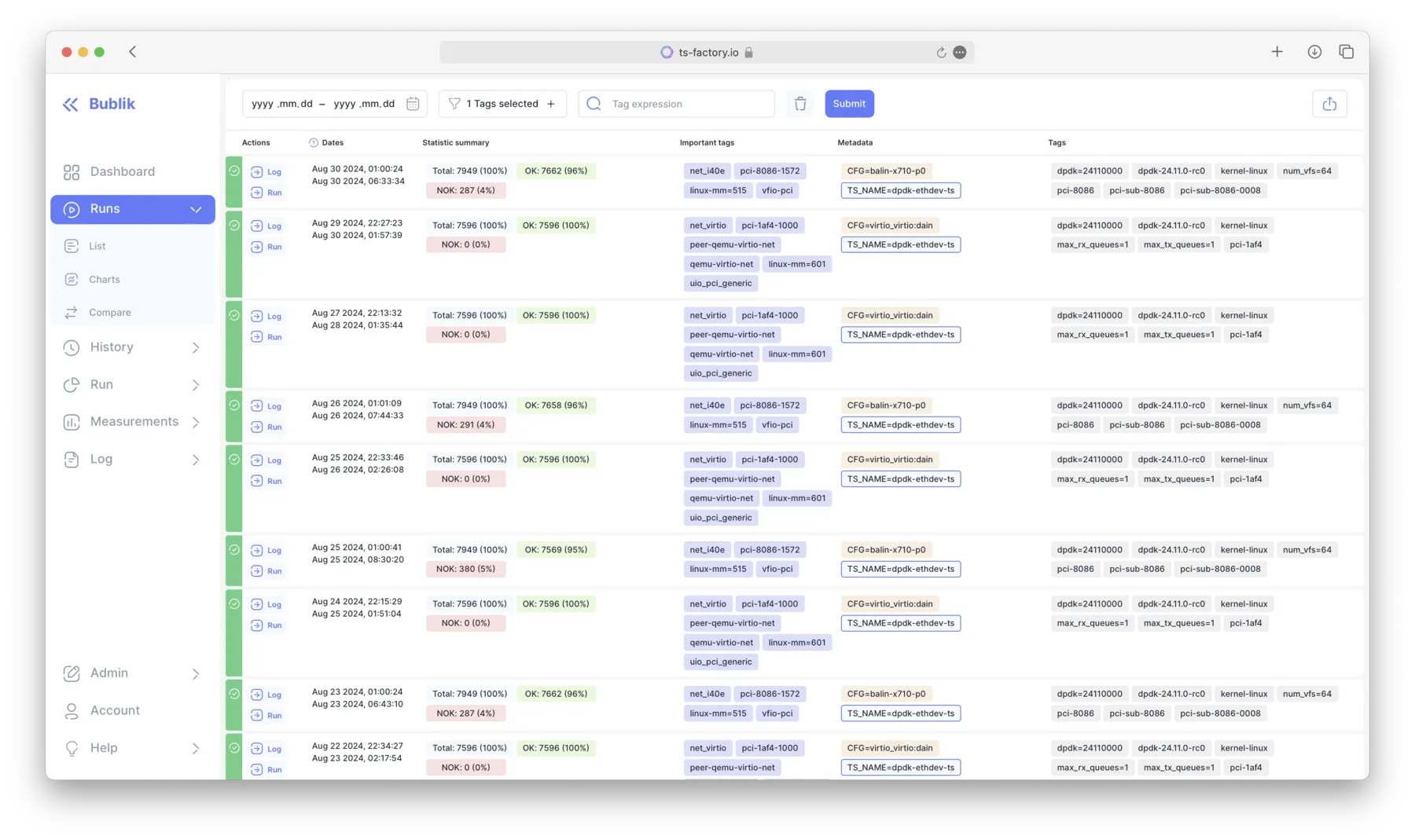
Runs repeatable tests across devices, nodes and complex environments, and records the exact environment behind each run.
Delta
At runtime
Collects logs, system events and resource data while the software is running, so real behaviour can be compared against the test results.
Midair connects the three stages
A finding from static code analysis, the test run that reached that code, and the runtime evidence from the run stay linked.
Code findings, test runs and runtime evidence do not live in three separate tools. A failure can be read together with the code and the environment that produced it.
Use cases
Midair is built for systems where a defect is hard to reproduce and costly to miss.
Embedded systems testing
Firmware, microcontrollers and real-time operating environments
Network hardware
Routers, switches and the software that moves traffic through them
High-performance systems
Services under sustained load, where a defect appears only at scale
Complex distributed environments
Multi-node systems where a result depends on timing and the order of events
Security-critical software
Software where security failures have serious operational consequences and need reproducible evidence
What Midair covers
Five capabilities, used together or one at a time.
Static code analysis
Find defects, unsafe patterns and rule violations in the source before the software runs.
Distributed and repeatable testing
Run the same test set across many devices and nodes in parallel, and get the same answer back each time.
Runtime monitoring
Collect logs, system events and resource data from the running system, tied to the run that produced them.
Real-device and complex-environment testing
Run tests against real hardware, network environments and existing hardware-in-the-loop setups.
CI/CD integration
Runs inside your existing pipelines, so every change is checked before it merges.
Start your pilot
Community
€0
Run Visao and TS Factory on a shared instance and review the findings.
Most popularPro
€90per month
Your own Midair instance for the team, with Delta, MCP and AI analysis of results.
RecommendedBusiness
€990per month
Add SBOM and vulnerability analysis, team performance metrics and self-hosted instances.
For complex environmentsEnterprise
Custom
Adapt Midair to a large-scale, embedded or regulated environment.
Compare the plans and pick one on the pricing page. Prices are monthly, in euros.