Static code analysis
for complex systems
Analyze your code before execution - detect vulnerabilities, unsafe dependencies, and design flaws at compile time.
Why static code analysis matters
Modern software systems are becoming increasingly complex, with multiple dependencies, distributed components, and evolving architectures.
Without deep static analysis, critical issues can remain hidden until runtime - or even production.
Static code analysis helps identify vulnerabilities, unsafe dependencies, and architectural weaknesses early in the development lifecycle.
What is static code analysis?
Static code analysis is the process of examining source code without executing it to detect potential issues, vulnerabilities, and inconsistencies.
Static analysis provides deep insight into code structure, data flows, and dependencies without executing the system.
It enables teams to catch problems at compile time, ensuring higher code quality, improved security, and more predictable system behavior.
Compile-time detection
Find issues before code ever runs
Security assurance
Identify vulnerabilities and unsafe patterns
Architecture visibility
Understand structure and dependency risks
Challenges in modern codebases
Modern codebases often include millions of lines of code, multiple programming languages, and complex dependency trees.
Hidden vulnerabilities in dependencies
Third-party and transitive dependencies introduce risks that are hard to detect manually
Unsafe or inconsistent code patterns
Patterns that compile and run but cause failures under specific conditions
Lack of visibility across large systems
No single view of code quality and risk across millions of lines and multiple repositories
Increasing technical debt over time
Unenforced standards and growing complexity accumulate into serious long-term risk
Traditional approaches are often not sufficient to manage these risks effectively.
Our approach to static code analysis
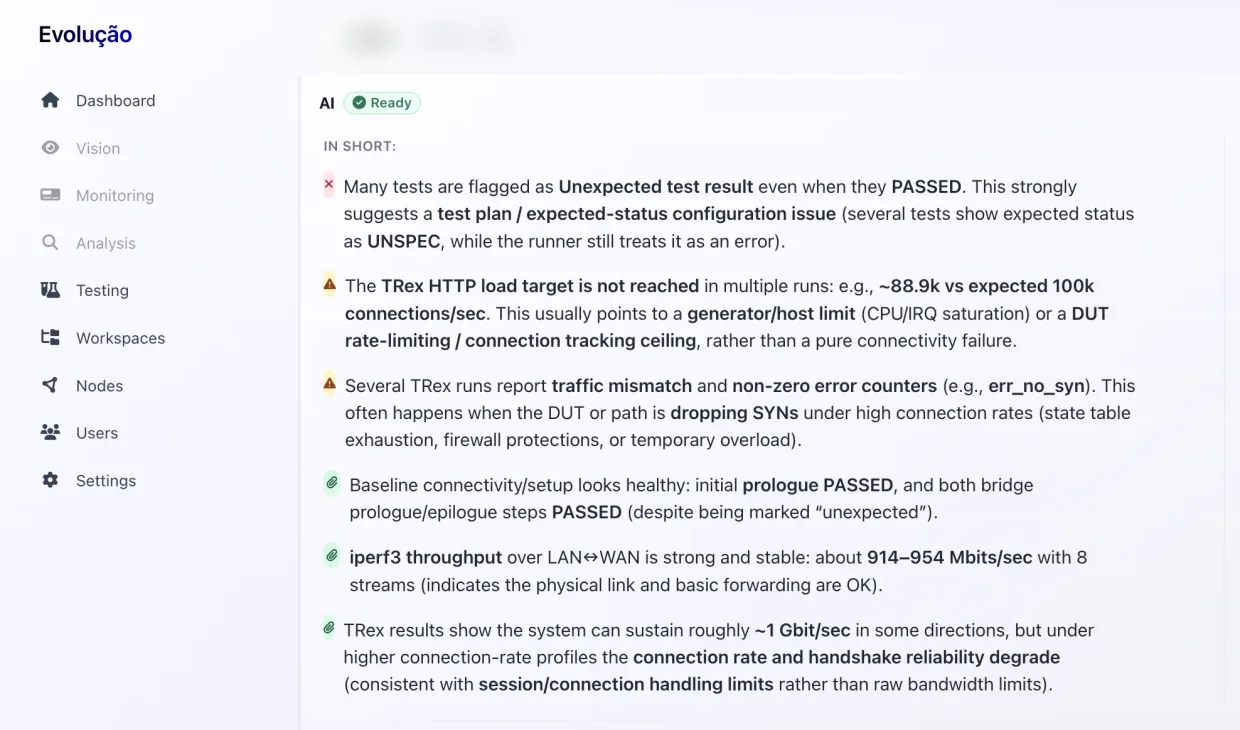
We combine advanced static analysis techniques with scalable infrastructure to analyze large and complex codebases efficiently.
This enables engineering teams to maintain high standards of reliability and security throughout the development lifecycle.
Use cases
Our static code analysis solutions are designed for teams working on systems where code quality, security, and reliability are non-negotiable.
Embedded systems
Firmware, microcontrollers, and real-time operating environments
Safety-critical software
Automotive, aerospace, industrial and medical device software
Distributed systems and microservices
Multi-node architectures with complex dependency graphs
High-reliability enterprise applications
Systems where correctness and uptime are business-critical
Regulated industries
Automotive, aerospace, telecom - where compliance is mandatory
Tools and capabilities
Our platform provides a modular set of tools for comprehensive static code analysis.
Security vulnerability detection
Identify injection paths, unsafe APIs, and cryptographic misuse at compile time.
Dependency analysis
Map and validate dependencies across your codebase to surface hidden risk before it reaches production.
Code structure and architecture analysis
Detect architectural drift, dependency cycles, and structural risks across modules.
Compliance and standards validation
Enforce coding standards and compliance rules automatically across your entire codebase.
CI/CD integration
Seamless integration with your existing pipelines for continuous quality enforcement.
Improve your code before it runs
Detect vulnerabilities, unsafe dependencies, and design flaws at compile time - before they reach production.
Request a demo
Tell us about your project and we will propose a static analysis approach tailored to your codebase and requirements.
We typically respond within 1-2 business days.